As a supplier of 24V lifting targets, ensuring the synchronization of multiple 24V lifting targets is a crucial aspect that directly impacts the performance and user experience of our products. In this blog, I will share some effective methods and considerations to achieve this synchronization.
Understanding the Basics of 24V Lifting Targets
Before delving into the synchronization methods, it's essential to understand the basic working principles of 24V lifting targets. These targets are typically powered by a 24V power supply, which drives the lifting mechanism to raise or lower the target. The lifting action can be controlled by various means, such as manual switches, remote controls, or automated control systems.
The synchronization of multiple 24V lifting targets refers to the ability to make them move up and down simultaneously or in a coordinated manner. This is particularly important in applications where multiple targets need to operate in unison, such as in shooting ranges, training facilities, or sports competitions.
Methods for Ensuring Synchronization
1. Wired Connection
One of the most straightforward ways to ensure synchronization is through a wired connection. By connecting all the 24V lifting targets to a common control system using wires, you can send the same control signals to each target simultaneously. This method provides a high level of reliability and accuracy, as the signals are transmitted directly without interference.
To implement a wired connection, you will need to use a suitable control cable that can carry the power and control signals. The cable should be properly shielded to prevent electromagnetic interference. Additionally, you may need to use a junction box or a distribution panel to connect multiple targets to the control system.
2. Wireless Communication
Wireless communication is another option for synchronizing multiple 24V lifting targets. This method offers greater flexibility and convenience, as it eliminates the need for extensive wiring. Instead, the targets are equipped with wireless communication modules that can receive control signals from a central controller.
There are several wireless communication technologies available, such as Wi-Fi, Bluetooth, and ZigBee. Each technology has its own advantages and disadvantages, so you need to choose the one that best suits your application requirements. For example, Wi-Fi offers high-speed data transfer but has a limited range, while ZigBee has a longer range but lower data transfer rates.
When using wireless communication, it's important to ensure that the communication protocol is compatible with all the targets and the control system. You may also need to configure the wireless network settings, such as the channel and the encryption key, to ensure secure and reliable communication.
3. Master-Slave Configuration
A master-slave configuration is a common method for synchronizing multiple devices. In this configuration, one target is designated as the master, and the other targets are set as slaves. The master target sends control signals to the slaves, which then follow the master's commands.
To implement a master-slave configuration, you need to ensure that the master target has the necessary control capabilities and can communicate with the slaves. The slaves should be configured to receive and respond to the master's signals. This method allows for easy expansion and customization, as you can add or remove slaves as needed.
4. Synchronization Algorithms
In some cases, you may need to use synchronization algorithms to ensure that the 24V lifting targets move in a coordinated manner. These algorithms can take into account factors such as the target's position, speed, and acceleration to calculate the appropriate control signals.
For example, you can use a PID (Proportional-Integral-Derivative) controller to adjust the lifting speed of each target based on its position error. The PID controller continuously monitors the position of the target and adjusts the control signals to minimize the error. This method can improve the synchronization accuracy and stability of the lifting targets.
Considerations for Synchronization
In addition to choosing the appropriate synchronization method, there are several other considerations that you need to keep in mind to ensure the successful synchronization of multiple 24V lifting targets.
1. Power Supply
The power supply is a critical factor that can affect the synchronization of the lifting targets. You need to ensure that the power supply is stable and can provide enough power to all the targets. A fluctuating or insufficient power supply can cause the targets to operate erratically or even fail to synchronize.
To ensure a stable power supply, you may need to use a regulated power supply or a UPS (Uninterruptible Power Supply). Additionally, you should check the power requirements of each target and make sure that the total power consumption does not exceed the capacity of the power supply.
2. Mechanical Installation
The mechanical installation of the 24V lifting targets can also impact their synchronization. You need to ensure that the targets are installed correctly and securely, with proper alignment and clearance. Any misalignment or mechanical interference can cause the targets to move unevenly or get stuck.
When installing the targets, you should follow the manufacturer's instructions carefully. Make sure that the mounting brackets are properly tightened and that the lifting mechanism is lubricated regularly. Additionally, you may need to perform a test run after installation to check the synchronization and adjust the settings if necessary.
3. Maintenance and Calibration
Regular maintenance and calibration are essential for ensuring the long-term synchronization of the 24V lifting targets. Over time, the mechanical components of the targets may wear out or become misaligned, which can affect their performance. Therefore, you need to perform regular inspections and maintenance to keep the targets in good working condition.
Calibration is also important to ensure that the targets are moving accurately and synchronously. You can use a calibration tool or a reference target to check the position and movement of the targets. If any discrepancies are found, you should adjust the settings or replace the faulty components.
Conclusion
Ensuring the synchronization of multiple 24V lifting targets is a complex but achievable task. By choosing the appropriate synchronization method, considering the power supply, mechanical installation, and maintenance requirements, you can achieve a high level of synchronization and reliability.
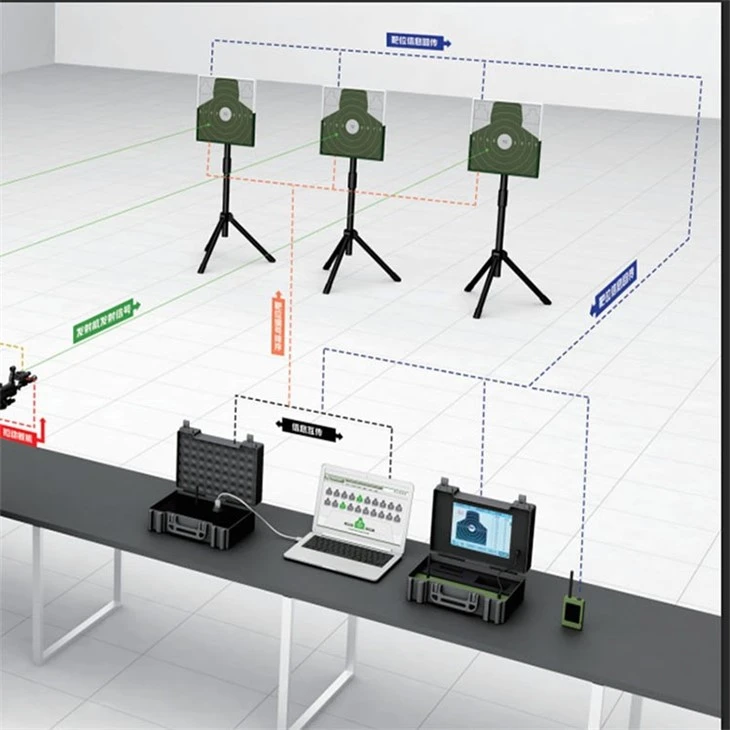

As a supplier of 24V lifting targets, we offer a wide range of products and solutions to meet your synchronization needs. Our Laser Training Target Reporting System, Sports Rotating Target, and High Power Lifting Target are designed to provide accurate and reliable performance.
If you are interested in our products or have any questions about synchronizing multiple 24V lifting targets, please feel free to contact us for more information. We look forward to working with you to provide the best solutions for your application.
References
- "Industrial Automation Handbook" by Peter Welter
- "Wireless Communication Systems" by Theodore S. Rappaport
- Manufacturer's manuals for 24V lifting targets